|
Paul Johnson is a new entry this year |
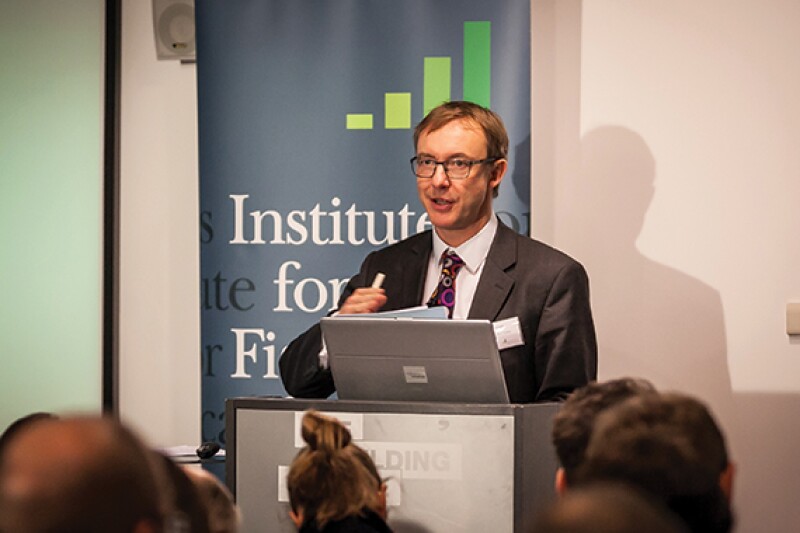
As director of the UK Institute of Fiscal Studies (IFS) and visiting professor in the department of economics at University College London, Paul Johnson has played an important role in shaping the direction of tax policy and creating awareness of shortcomings in the system.
Johnson has been the IFS director since January 2011 and has worked extensively on the economics of public policy, with a particular focus on taxation, among other topics.
On August 25 2016, Johnson was also appointed to the board of the Office of Tax Simplification, which was established in 2010 to provide advice to the Chancellor on simplifying the UK tax system and was made a permanent, independent office of the Treasury in July 2015. It was put on a statutory footing in the Finance Act 2016.
Johnson is also a member of the executive committees of the Royal Economic Society, of the committee on climate change, and of the banking standards board.
He has published many articles on tax and books on economics during his career, and is an editor of the "Mirrlees Review", the biggest independent review of the UK tax system carried out in the past 40 years.
Johnson has been involved in IFS work that has examined the devolution of tax powers in the UK, excise duties, sugar tax, and issues on where tax revenues come from and will come from in the future.
Alongside the Chartered Institute of Taxation, and Institute for Government, Johnson has been arguing for the UK to reform its tax policy-making process and has aired his views in various speeches and presentations throughout the year, most recently in an article published in The Times on November 1.
"How the tax system works matters enormously to us all. The current system for tax policy making is not fit for purpose," Johnson said in a recent letter to Chancellor of the Exchequer Philip Hammond. "Too many changes are sprung on the country in too many fiscal events with too little sense of direction, consultation or evaluation."
Johnson has been influential in bringing together policymakers and taxpayers at several IFS events throughout the year. In September 2016, the IFS hosted a conference attended by Edward Troup, HMRC executive chair and permanent secretary, and Jane Ellison, financial secretary to the Treasury. It looked at corporate tax and corporate tax avoidance, and it was attended by over 100 government tax officials and tax leaders.
The IFS also jointly hosted a BEPS conference in April 2016 with the European Tax Policy Forum entitled "BEPS and beyond", which the former UK financial secretary to the Treasury David Gauke said highlighted the need for "truly effective action" that "needs to be multilateral".
Over the coming year, Johnson said that the IFS will continue its work on corporate and other UK tax policies, as well as developing its new Department for International Development (DfID), examining tax policy in developing countries.
Looking ahead, Johnson said he is intrigued to see how the uncertain times in the UK will pan out and how the government will adapt the tax system. "We have got a lot more uncertainty about where tax policy, and the public finances generally, are going to go over the next couple of years. Is it going to be lots of smallish things and continual tax changes as we have seen with previous Chancellors, or are we going to get something rather different – are we going to see more tax? If we're going to see less in the way of public spending cuts, will that mean a world in which we look to raise taxes? I just don't know the answer to that and I'm fascinated to find out what's going to happen."
The Global Tax 50 2016 |
|
|---|---|
The top 10 • Ranked in order of influence |
|
2. The International Consortium of Investigative Journalists |
|
3. Brexit |
4. Arun Jaitley |
5. Jacob Lew |
|
10. Donald Trump |
|
The remaining 40 • In alphabetic order |
|